(Image source from: Indiatoday.in)
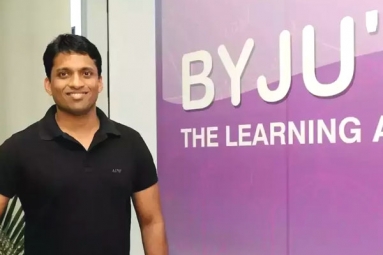
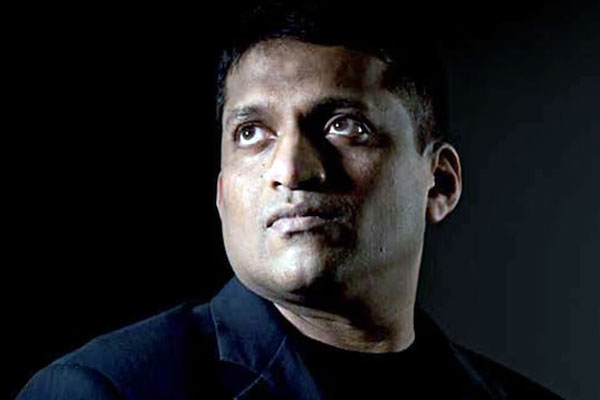
Once, Byju's seemed unbeatable. Its logo was displayed on the Indian cricket team's uniform. International investors were eager to invest in the firm. Parents throughout India believed in the idea that technology could change education. At its highest point in 2022, the company's value hit $22 billion, and founder Byju Raveendran became a well-known figure in India's startup scene. Now, this same founder has received a six-month jail sentence from a court in Singapore for not following court orders related to his assets. This significant change represents the latest development in one of the largest corporate failures in India's startup history. What began as a rapidly growing educational technology success slowly turned into delays in audits, increasing debt, frustrated investors, bankruptcy proceedings, claims of misused funds, lawsuits across borders, and a worldwide search for missing funds.
Founded in 2011 as Think & Learn Pvt Ltd, Byju's quickly grew by capitalizing on India's strong emphasis on education and exams. The timing for the company was perfect. With the rise of smartphones in India and online learning becoming popular, Byju's positioned itself as the future of education. Then came Covid-19. Schools closed. Students shifted to online learning. Demand surged. Investors jumped on board. Major global companies supported the firm. Byju's aggressively expanded into the US and other areas. It rapidly acquired companies, including Aakash Educational Services, Great Learning, and Epic, spending nearly $3 billion on these purchases. The company projected confidence everywhere with large advertising campaigns, celebrity endorsements, and cricket sponsorships, along with global aspirations. However, beneath this swift growth, issues were silently developing.
In November 2021, Byju's secured a huge $1.2 billion loan from international lenders. At the time, it was seen as proof that Indian startups had made their mark globally. However, this loan later became central to Byju's downfall. The company claimed the funds would support growth and expansion, but lenders soon began to have concerns about governance and transparency. Problems arose when Byju's postponed submitting its audited financial records. Questions were raised about how it was reporting revenue. The Ministry of Corporate Affairs reportedly demanded explanations for the delays in filings.
When the financial year 2021 results were eventually released, many investors were taken aback. Losses had soared to about Rs 4,588 crore. Confidence started to wane. As scrutiny increased, Byju's faced one of the worst signs any business can encounter: auditors resigning. Deloitte stepped down as auditor due to delays with financial statements and poor communication. Later, the India branch of BDO Global also resigned.
For investors and lenders, this was a serious warning sign. A company that once represented India's startup boom now seemed increasingly hard to track financially. Consequently, global lenders started seeking explanations.
By the end of 2022 and the start of 2023, the relationship between Byju's and its financial backers fell apart. The lenders accused the company of not following loan agreements. Attempts to restructure the debt did not succeed. Then, a serious accusation arose that changed everything. Lenders claimed about $533 million associated with the loan had been transferred without proper notice. The legal dispute quickly expanded internationally. Lenders from the US aimed to gain control over Byju's American branch, Byju's Alpha. Legal conflicts started in Delaware and New York. Byju's blamed the lenders for being overly aggressive. Conversely, the lenders alleged that the company was hiding its assets and moving money abroad. Then, another serious claim emerged. Court documents later stated that a UK logistics firm, OCI Limited, had been used to move and hide over $500 million from the lenders. According to these documents, the money allegedly passed through several businesses before reaching a Singapore company linked to Byju's operations. These claims intensified concerns that the company’s financial situation had become unclear and disorganized.
While American lenders went after the company in US courts, Singapore became another significant legal battleground. A branch of the Qatar Investment Authority started legal action related to investments and asset transfers involving people connected to Byju Raveendran. Reports indicated that the disagreement arose from financial agreements related to buying shares of Aakash Educational Services. Courts in Singapore later issued orders for asset disclosures and ownership documents. Eventually, the court decided that Raveendran had not followed several orders since April 2024, according to the media. This resulted in a new ruling: six months in jail for contempt of court. He was also required to cover costs and provide documents proving legal ownership of Beeaar Investco Pte, an entity related to the conflict.
As global legal conflicts increased, issues erupted back home. In July 2024, the Bengaluru branch of the National Company Law Tribunal accepted insolvency proceedings against Think & Learn. The trigger was unexpectedly minor compared to the company’s worldwide debts: unpaid dues of about Rs 158 crore owed to the Board of Control for Cricket in India. The irony was notable. The same cricket sponsorship deal that had once showcased Byju's marketing strength ended up being one of the reasons for the insolvency actions. The company attempted to resolve the disagreement. However, the lenders opposed it. Several courts got involved. The issue escalated into a larger struggle over who had control of the company and its assets. One of the key battles focused on Aakash Educational Services, arguably Byju's most valuable asset. Byju's had purchased Aakash in 2021 for almost $1 billion. This acquisition was intended to enhance its blended online-offline education approach.
Instead, Aakash turned into yet another legal dispute. As bankruptcy processes began, Aakash suggested a rights issue to gather new funds. Byju's strongly opposed this. The company contended that due to its ongoing bankruptcy proceedings, it couldn't participate fully in the issue. This would significantly reduce its ownership share -- from around 25.75 percent to possibly less than 5 percent. However, the tribunals did not prevent the proposal. If the dilution occurs completely, Byju's could lose effective control of what was once seen as its most valuable asset. As legal issues grew, operational problems became evident. Workers spoke up about late paychecks. Job cuts spread among various teams. Investors openly questioned the decisions made by management. Several board members left their positions. Some investors blamed the company for inadequate governance and mishandling of affairs. The decline in valuation was severe. From a peak of $22 billion, Byju's valuation dropped sharply. Reports claimed that some investors marked the company's worth at close to $1 billion or even less. Eventually, Forbes reduced Byju Raveendran's wealth to nothing.
In response to the situation, Raveendran stated, "I have not done anything wrong, nor have the other founders. " He mentioned that he hadn't been "actively fighting" multiple court cases recently because talks for a settlement with lenders were ongoing. He noted that lenders like GLAS Trust and others associated with Qatar Investment Authority (QIA) had been in conversation with the founders for a while. "A settlement has been mostly agreed upon, with just a few remaining issues," he asserted, adding that he had "no involvement" in those outstanding matters. Earlier, in a LinkedIn message from last year, Raveendran claimed "criminal collusion" involving individuals related to the bankruptcy process. He argued that whistleblower documents indicated improper cooperation among the parties engaged in restructuring efforts. These allegations contributed another dimension to the already complex legal situation.
Simultaneously, US courts issued harsh judgments regarding financial transactions linked to Byju's Alpha and hedge fund Camshaft Capital. American courts accused persons connected to the company of conducting illegal transfers amounting to hundreds of millions of dollars. Byju's downfall is now seen as more than just the failure of a single startup. It has turned into a cautionary tale about reckless expansion, debt-driven growth, and poor governance within India's startup landscape. The company grew at an extraordinary pace. However, it also spent excessively, borrowed heavily, and expanded faster than its infrastructure could support. When growth slowed down after the pandemic, the issues became apparent quickly. Today, the company that once aimed to transform global education is struggling to survive across numerous courts and countries. Its founder -- once celebrated as the embodiment of India's startup boom -- now faces the possibility of jail in Singapore, growing lawsuits in the US, and a bankruptcy struggle in India.