(Image source from: retail.economictimes.indiatimes.com)
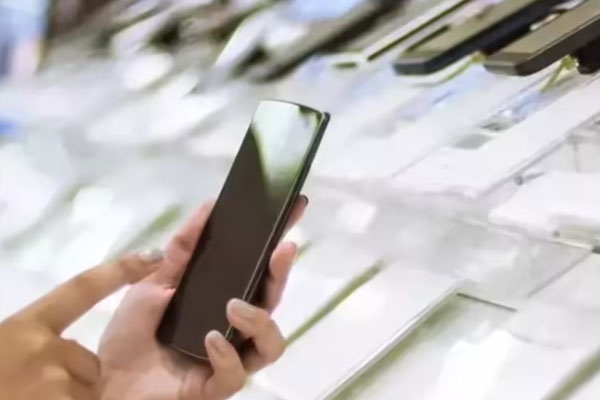
Smartphone deliveries in India saw a decrease of 3 percent compared to the same time last year in the first quarter of this year. This represents the lowest first quarter in six years, as stated by the Monthly India Smartphone Tracker report from Counterpoint Research. The decline is mainly due to ongoing issues with memory prices, rising costs in various segments, and low demand from consumers. Despite the drop in overall sales, Vivo secured the top spot in smartphone deliveries in India, holding a 21 percent share of the market. Samsung ranked second, while Oppo stayed in third place. Nothing became the fastest-growing smartphone brand with a 47 percent increase in sales year over year in Q1 2026, and Google was noted as the fastest-rising brand in the high-end market. According to Counterpoint Research's latest Monthly India Smartphone Tracker report, smartphone shipments in India dropped by 3 percent from last year in Q1 2026. This quarter is the weakest seen in six years, with the decrease linked to rising supply costs, price increases by manufacturers, and reduced consumer interest. Facing increasing costs for components from memory price hikes and currency changes, around one-third of new smartphone launches were delayed until Q1.
Vivo, not counting iQOO, led India’s smartphone market in Q1 2026 with a 21 percent market share. The report indicates that a greater number of launches, strong interest in the mid-premium sector driven by the latest V-series smartphones, and effective channel strategies contributed to this success. Samsung came in second place, with growth fueled by sales promotions on A-series models like the Samsung Galaxy A07, Galaxy A36, and Galaxy A56, along with strong initial demand for the Galaxy S26 line, particularly the Galaxy S26 Ultra version. A well-rounded product lineup across different price ranges also bolstered their growth. Samsung achieved its highest shipment levels from the Rs. 15,000 to Rs. 20,000 price range in this quarter.
Oppo maintained its third-place ranking with a 14 percent market share, aided by strong sales of its budget A and K series and the Reno models. The Chinese technology brand became the fastest-growing among the top five by achieving an 8 percent growth year over year. Alongside its sub-brand Poco, Xiaomi reached fourth place in Q1 2026, thanks to significant growth in the Rs. 10,000 to Rs. 20,000 market segment. Xiaomi held a 7.9 percent share, while Poco took 4.8 percent.
At the same time, Realme secured the fifth place with an 11 percent share of the market, supported by a strong online presence and the popularity of the Realme P3 Lite and Narzo 80 Lite. Apple captured a 9 percent market share, which Counterpoint Research links to ongoing interest in the iPhone 17 series. According to Counterpoint Research, Nothing (including CMF) maintained its solid growth in the first quarter of 2026. The UK-based brand reported a 47 percent year-on-year increase during this time. Key drivers of this growth included rapid offline expansion, the opening of its first exclusive retail store in India, and the appeal of the Phone 4a series. Google recorded the quickest growth in the premium segment (priced above Rs. 45,000), achieving a 39 percent increase year-on-year. At the same time, OnePlus was a leader in the affordable premium segment, priced between Rs. 30,000 and Rs. 45,000 on Amazon, thanks to its Nord series and the new Nord 6. In terms of chipsets, MediaTek led in overall shipments with a 49 percent share, while Qualcomm dominated the premium Android market with over a 50 percent share. The report also highlighted rising smartphone prices, with more than 80 models experiencing an average increase of 15 percent in the first quarter and a 15 to 20 percent rise anticipated in the second quarter, primarily due to ongoing cost challenges.
Discussing the future of the market, Tarun Pathak, Research Director at Counterpoint Research, pointed out that the industry is likely to face pressures soon, with a probable double-digit decrease expected in the second quarter of 2026 as high memory prices and low demand for entry-level devices continue to affect overall sales. "For the entire year, the market is expected to drop by 10 percent year-on-year, as persistent inflation in component costs, especially in memory, which has already increased four times in the last three quarters, continues to affect affordability and extend replacement cycles," he remarked.