(Image source from: Indiatvnews.com)
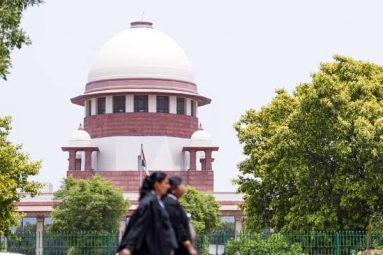
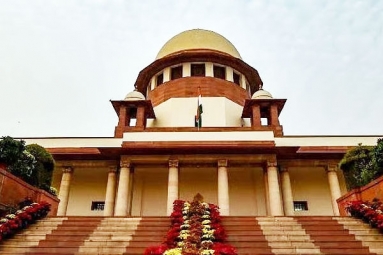
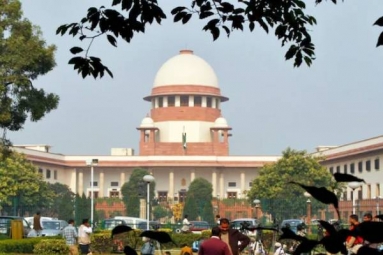
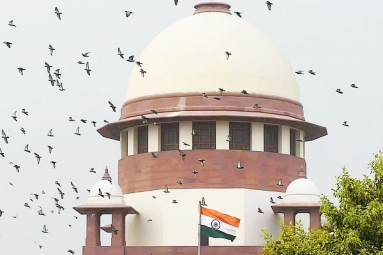
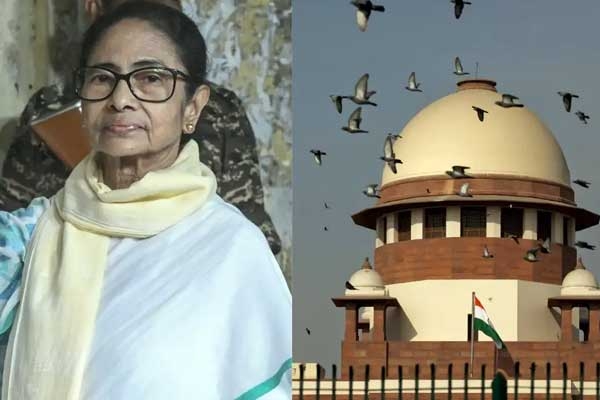
The Trinamool Congress went to the Supreme Court on Friday to oppose the Election Commission’s choice to only have employees from the central government and Public Sector Undertaking (PSU) work as supervisors and assistants for counting votes on May 4. The party requested an urgent hearing, and a special two-judge panel made up of Justices PS Narasimha and Joymalya Bagchi will review the matter on Saturday. This action was taken amid increasing tensions during the second phase of voting, after West Bengal Chief Minister Mamata Banerjee claimed that “outsider observers” and police officers unfamiliar with Bengal were being used in a way that targeted TMC supporters. Her statements added to a highly charged political climate characterized by conflicts between TMC and BJP workers during this voting stage.
Not long ago, the Additional Chief Electoral Officer (CEO) of West Bengal sent out a notice stating that at least one person among the counting supervisor or counting assistant at every voting table must be a central government or PSU employee. The TMC disputed this order, saying that such a decision could only come from the Election Commission and not from the Additional CEO, according to LiveLaw. The party maintained that this instruction went against the guidelines which do not require central employees for the roles of counting supervisor or assistant. The TMC pointed out that although micro-observers usually come from central services, applying this same rule to counting staff was unfair and only specific to West Bengal. In its legal action, the TMC claimed there could be bias, stating that central government workers might be biased because the central government is led by a political party, which could disrupt fairness during the counting process.
The Calcutta High Court dismissed these claims, stating that the Election Commission's guidelines permit the appointment of counting staff from either central or state government services. The court determined that the choice of personnel is within the authority's judgment and is allowed according to LiveLaw.
Rejecting claims of partiality, the High Court pointed out that there are already various protections in place during the vote counting process, such as observers, agents chosen by candidates, and cameras for monitoring. It stated that the concerns brought up by TMC were not supported by facts. The High Court mentioned past court cases related to similar election disputes, emphasizing that while the Supreme Court had previously dismissed a related request for special consideration, the legal issue was still open for later discussion, according to LiveLaw. The court determined that just having doubts about bias was not enough for them to interfere, leading to the dismissal of the case, which caused TMC to take their concerns to the Supreme Court. This decision came at a time of rising political strife during the second phase of voting, with the TMC and BJP both accusing each other of harassment and interference. There were also incidents of violence between supporters of different parties, and increased police presence drew criticism from the ruling party.
A high-ranking police official in Uttar Pradesh, Ajay Pal Sharma, known as the "UP Singham officer," faced examination after he issued serious warnings to a TMC candidate about hindering the voting process or confronting security forces. The TMC condemned the behavior of this officer, claiming he was intimidating their party members. Conversely, the BJP supported the strong security actions needed to guarantee a fair and free election. The situation became even tenser when senior TMC figure Abhishek Banerjee accused central forces of causing the death of an elderly man who was being assisted by his son to enter a polling station in Howrah. This accusation intensified the party's dissatisfaction with the presence of central security during the election, although the Election Commission has not yet responded to these allegations.