(Image source from: News18.com)
The Lakshadweep islands, which have a majority Muslim population and where drinking alcohol was banned mainly because of the Lakshadweep Prohibition Regulation from 1979, has now seen that ban lifted by the central government. President Droupadi Murmu has given the green light to a new excise law that puts an end to the 47-year-old alcohol prohibition in Lakshadweep. The newly signed Lakshadweep Excise Regulation for 2026 establishes a strict framework for the sale and use of alcohol in this Muslim-majority area. While the government’s choice to allow alcohol aims to enhance tourism in the largely Muslim Union Territory, local residents have expressed their disapproval of the new excise law, claiming it threatens their traditional community and way of life.
It's important to highlight that the alcohol ban in Lakshadweep started in 1979. The Muslim population makes up 97 percent of Lakshadweep's residents. This group has the largest percentage of Muslims among any state or Union Territory in India. A report from India Today indicates that many belong to Scheduled Tribes (ST). According to the 2011 Census of India, 61,120 out of the 64,473 people living in the territory, which is about 95 percent, are categorized as Scheduled Tribes. As drinking alcohol is forbidden in Islam, the prevalent Muslim community led to the prohibition of alcohol sales in the territory. Consequently, it became one of the few places in India, alongside Gujarat and Bihar and certain states in the Northeast, to outlaw the sale of alcohol.
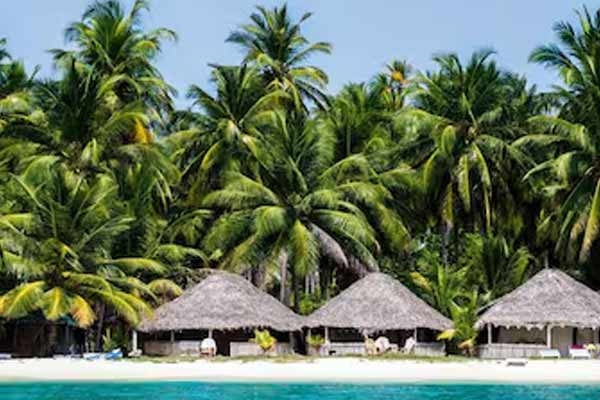
The administration had effectively maintained the ban, pointing to local customs and social factors. Many political groups and community organizations opposed the notion of increasing alcohol access. The prohibition continued, reflecting the existing cultural and religious practices of the islands. However, it should be noted that the ban was not total; there were certain allowances, and alcohol was available to tourists and government personnel under specific conditions. Reports indicate that at resorts on Kavaratti and Bangaram Islands, tourists could obtain alcohol while the overall prohibition framework remained unchanged.
The main goal is to transform the Union Territory into a high-end international tourism destination. The aim is to extend controlled access to alcohol beyond just secluded resorts like Kavaratti and Bangaram. This is part of a larger hospitality effort to draw in more travelers from both India and abroad. Officials claim that strict alcohol restrictions in the islands have been a disadvantage for tourism. They have long maintained this viewpoint, especially when comparing it to other Indian Ocean locales, notably the Maldives, where alcohol is accessible at tourist resorts. Shifting to the economic aspect, with the new legislation, the administration can impose excise taxes, licensing fees, and registration costs to support local development.
According to various reports, the newly introduced rules create a legal system aimed at monitoring and controlling the production, importation, exportation, transportation, and sale of alcoholic beverages. The alcohol market in Lakshadweep is not free; rather, it is strictly regulated by the government, as stated in these reports. The regulations also set high tax rates on different types of alcohol: Indian Made Foreign Liquor (IMFL) and imported alcoholic drinks will incur a tax of 400 percent, while beer will have a 200 percent tax and wine an 80 percent tax. Only government-run companies, authorized agencies, and selected private businesses can get official permissions to sell or manage these drinks.
To qualify for the license, certain conditions must be met. A person must be an Indian citizen, over 18 years old, and without any criminal history. They should not have been convicted of any offenses related to alcohol laws before. Any business wanting to sell alcohol must be at least 50 meters away from schools, places of worship, hospitals, and orphanages. Selling or buying alcohol by anyone younger than 21 is strictly banned. A ban was introduced in 1979 to honor Islamic beliefs, which clearly prohibit drinking alcohol. However, alcohol has been legally sold in Jammu and Kashmir for a long time. Many Muslim-majority nations, like the Maldives, allow alcohol sales in specific areas, as noted in reports.
Local groups are very dissatisfied with this ruling, as they feel it threatens their traditional community values and lifestyle. Muhammed Hamdullah Sayeed, alongside civil society groups, local leaders, and the Member of Parliament for Lakshadweep, have spoken out against the new rules, emphasizing that the Union Government implemented them without consulting the local community. The main worry of the opposition is that this may lead to more addiction among young people in the union territory and disturb the calm, low-crime nature of the islands, according to reports.